Perhaps you worked with a project manager who was obsessed with taking precautions to make sure his team is working perfectly without making any mistakes, and would assign different tasks to team members in the meetings that each one of them must complete in the following week. Then he would decide to get half of it done without telling anyone.
The pressure that the manager puts on his team is due to the tension he feels. We are biologically equipped to do one of two things to face a threat or danger: Either run too fast in the opposite direction, or stand still and fight like a champ.
In a state of intense emotional outburst, the decision to act rationally comes second in importance after the survival instinct. In this scenario, the manager feels like he is fighting like a hero.
Any manager is liable to get anxious when the project deadline is near.
Even if he is not fully aware of it, he may feel threatened by the possibility of failure. In worst cases, he cannot control how tasks are accomplished or know when they end, and the question that arises here is: Why does he control every little thing in the management of his employees?
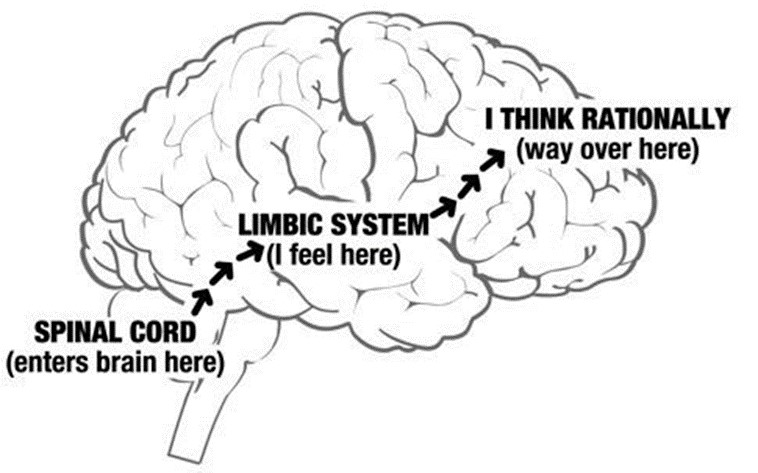
All our experiences go through the emotional part of our brains first, which is called the limbic system. The limbic system senses an exciting event, such as a deadline we must meet, before having any rational reaction to this situation. So we feel anxious, excited, or upset before the logical part of the brain becomes unable to choose the direction we should take in response to the situation. The manager's anxiety translates into doubting the abilities of his team members.
The manager may not be aware of these feelings and does not realize the impact of his actions on those around him. Therefore, he needs to develop the skills of understanding and managing emotions to improve both his performance and his team's. Also, he needs to develop his emotional intelligence.
This condition is widespread, as research conducted by TalentSmart on hundreds of thousands of people found that only 30% of people can accurately identify their emotions as they occur. More than 70% have great difficulty dealing with the inevitable conflict and stress at work.
Developing emotional intelligence changes the manager himself in our previous example, and the deep-felt difference he will experience will not be apparent. When someone develops new emotional intelligence skills, their brain cells form new connections that facilitate the continued use of new behaviors.
A single brain cell can develop 15,000 connections to help it communicate with the cells next to it. When a manager develops and applies new emotional intelligence skills, it strengthens the connection between the parts of his brain that are responsible for emotional feeling and rational thinking. This physical change helps him delegate tasks and resist the urge to control every little thing whenever a similar deadline comes. Instead of doing the tasks of the team members himself, he meets with them one by one, monitors their progress, and provides help when needed. In meetings, he reassigns the tasks as needed and emphasizes the importance of timing.
Research conducted by TalentSmart showed that emotional intelligence skills represent 58% of supervisors' and CEOs' job performance. This strong correlation is due to the interrelation between four emotional intelligence skills - self-awareness, self-management, social awareness, and relationship management - in everything we do and say at work.
Any manager can enhance their productivity by measuring their emotional intelligence and developing the skills they need most. We all know that it is necessary to strive to understand situations first before making judgments about them. It would be best if we use the same strategy when working with others as well.
 Events